

What do they call you?
Names: Meaning, Erasure, and Choosing

“You were going to be Veronica, Ronnie for short,” Mom explained. She can’t remember how she settled on Kimberly Cates, Kim for short. Since then, I’ve changed my last name three times—remnants of the patriarchy that I unconsciously followed. There are swaths of people who still call me Kim, which feels intimate or a sign of the length of the connection since for the last fifteen years, I’ve gone by Kimberly. There have been isolated variations along the way: one college friend and one beloved mentor get away with Kimmy, at my MFA program Kim Possible held on, and one aunt made Kimber stick. In the 1970s-80s, Kim was an annoyingly common name. I sat through attendance rolls with multiple Kims: Kim Casabianca, Kimberly Tishue, Kim Perry, Kim Waltman, Kimmie Summit, Kim Clermont, Kim Clatworthy are the ones I can rattle off the top of my head. In the first years at my current employer, Foothill College I regularly received the VP of the College— Kimberlee’s emails, thanks to others blind multitasking and autofill.
As a young adult, I was suspicious to learn that Kimberly means “Royalty,” which confirmed that I must have been misnamed since I was not feeling queenly living in a makeshift room in the garage while the house was filled with a revolving door foster girls. After Mom divorced her second husband / my abuser, I longed for her to kick his name to the curb, but she didn’t. With his surname, she had “made a name for herself” in her work with foster youth and church. But I didn’t blame her, as I did the same with former husbands’ names. I never technically had my biological father’s last name Lee, unless you see Kimber(ly) Cates as a wink. Hanging on to old names seems to be a mix of an aversion to paperwork and a badge of shame. A red letter A for being left or leaving a failed marriage. Maybe I come from a lineage of Hester Prynne’s? My grandmother Velma had four last names as well, and died with arguably the worst of the lot on her gravestone.
Native Americans have healthier naming traditions, where names are often descriptive, fluid, and connected to character, accomplishments, tribal geography, milestones or visions over time. Latin Americans keep their genealogy and identity clear with two last names one from the mother and the other from the father.
Not surprisingly white Americans associate naming with ownership and erasure; we carry the weight and consequence of that violation, whether that’s an unhinged president selling (or legislating) his name be inscribed onto as many objects as possible or as enslavers and colonists contending with their history of sexist and racist naming as in Squ*w Valley. Unfortunately, the new name, Palisades Tahoe, sounds like it was approved by a venture capital board.
After European settlers arrived in North America, sooner or later most sought to replace the Indigenous populations. Typically, this began with the claiming and (re)naming of the land. Colonizers routinely imposed the names of their old countries on Native American lands, which is how we got New York, New England, New Jersey, Albany, Boston, and Portland. If naming is a source of power, then changing your name for a spouse feels like a surrendering of that power. Like the erasure of becoming Mrs. (Last name of Husband). Poof, she’s gone.
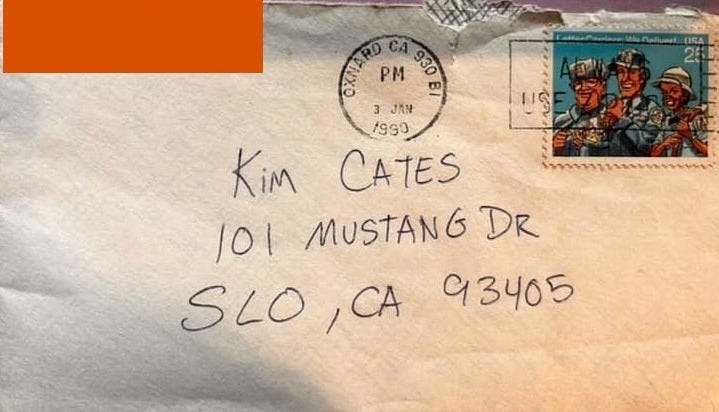
Cates is my last name on my birth certificate. My dad Sherman was a union ironworker, gifted storyteller, and big hearted, flawed man who used alcohol and pot to quell his own demons. I adored him and would hang off his bicep, watch tv in his lap and swim for hours in his apartment pool. He kept a picture of three year old me in his wallet to help him cash checks at the bar. Were my feelings codependent and problematic, absolutely. But I loved him all the same. He was generous with compliments and care for me. Since I never had a middle name from birth, when I married the first time, I scooted Cates over to fill that gap. Dad died in November of 2021, and when I have the impulse to call him and forget he’s gone, I listen to this voicemail from him that I keep on my computer.
(btw), he’s sober in this voicemail. Haha!
In 1995, I learned that Sherman Cates wasn’t my biological father. In 2002, my mother was brave enough to tell him the truth. After that I asked him, “Do you feel any differently towards me knowing that we aren’t related by blood?”
“No. you will always be my daughter.”
At that moment someone choosing me, not out of legal obligation but from desire to be in connection, healed a lot of what came before that moment, and should have been the moment I returned to Cates for good.


I leave you with a cento, a poem made from lines of other poems, that gets to the heart of naming for me: remembering who we are.
on naming yourself (a cento)

               By Jamila Woods

i caught my breath & called that life
i cannot be comprehended
it is better to write

spit out words into small cans
prepare knives for the cutting
of orange peels and doorways

i arrive at a space that no longer needs
autumn or spring, this forest
of telling each other the truth

where they suck the bones of the alphabet
over a floor of rubble & gravel & ashes

mouths wide open, we drank
we became the forest
drunk with sky

we felt awful after parting
from ourselves
played hide-and-seek
begging to be liked
among the leaves

i turned myself into myself
and was clean water, prayer
love colored with iron and lace

i wrote my name upon the water
i stood proudly at the helm
the names of things
hadn’t had time to stick
another face going under the waves

if you don’t know
who you are
your story cannot be pronounced

i have much to learn
from my errors
day by day i am a student
i step deeper into myself

this is a large voice
when you rise through the dead leaves
we will remember you